
Thursday, June 2, 2011
Pre-Opening Corn Market Report for 6/1/2011
 July corn was down 2 1/4 cents late in the overnight session, but it traded as much as 8 3/4 cents higher at one point. Outside market forces look mostly negative, with weaker metal and energy markets but also a weaker US dollar. A combination of the dry outlook for the US for another week or more and rain in the forecast for Europe appeared to be enough to turn the market weaker overnight, after it had a strong start. December corn hit a contract high last Thursday, but better weather for getting the crop planted is beginning to pressure the market. Traders had expected yesterday afternoon's Crop Progress Report to show US corn plantings to be around 89% complete, but the actual number came in at only 86% . This compares to 79% last week, 97% last year, and 92% as the 10-year average. Ohio was just 19% planted versus the 10-year average of 82%, and Indiana was 59% done vs. 77% on average. The report also showed that 63% of the crop was rated good/excellent, compared to 76% last year and a 10-year average of 67%. However, the forecast for 10 days of mostly dry and sometimes hot weather for the heart of the Corn Belt is seen as a factor which will help improve planting progress and crop conditions. The shift in the forecast to significant for Europe next week added to the negative tone overnight. Some traders believe that higher pork prices reported in China over the past few weeks could mean there will be increased feed grain demand coming from China. While there are some drought concerns in China, their corn production outlook is still favorable. Many traders are concerned that dryness issues could come up quickly if dry weather occurs in June. Newspaper reports from China suggest that 7 million hectares of farmland have been affected by drought. Weekly export inspections, released during the session yesterday, came in at 36.6 million bushels, which was near the high end of expectations. In order to reach the USDA projection for the year, corn shipments need to average 42.8 million bushels each week for the rest of the season. Traders indicated that 18.2 million bushels of corn moved out of the USDA loan program. That still leaves 384 million bushels tied up in the program.
Read more: http://community.nasdaq.com/News/2011-06/preopening-corn-market-report-for-612011.aspx?storyid=78550#ixzz1OAB2WHzW
Malawi Corn Price Declines 15% After Excess Production, U.S. Agency Says
 Malawi in southern Africa has produced too much corn for five years, pushing prices down by 15 percent this year, the U.S. Agency for International Development’s Famine Early Systems Network said.
Malawi has a corn surplus of 1.2 million metric tons after production of 3.8 million tons this year and 3.5 million tons last year, Malawi’s leader Bingu wa Mutharika told Parliament on May 23. The country has subsidized fertilizer use the past six years to boost food production and reduce poverty.
National grain storage stockpiles are not being used because of low prices in local markets, the USAID network said. Prices through September will probably stay below the government-set price of 40 kwacha (27 cents) a kilogram (2.2 pounds), it said.
Monday, May 30, 2011
Corn futures rally to 4-day high on increased China demand
 Forex Pros - Corn futures rallied to a four-day high on Monday, after the U.S. Department of Agriculture confirmed U.S. exporters sold corn to China last week, boosting demand expectations from the world's second largest corn consumer.
On the Chicago Mercantile Exchange, corn futures for July delivery traded at USD7.5825 a bushel during European morning trade, climbing 1.32%.
It earlier rose as much as 1.48% to USD7.5888 a bushel, the highest price since May 23.
The U.S. Department of Agriculture said in its weekly grain report on Friday that China bought 116,800 metric tons of U.S. corn in the week ended May 20. Although many traders believed China made additional purchases this year, Friday's report was the first sale in 2011 confirmed by the USDA.
Volume of U.S. corn for export inspected at U.S. ports totaled 726,700 metric tons, 52% higher than the four-week average.
Meanwhile, lingering concerns over tightening U.S. supplies continued to support prices, as adverse weather in key corn-growing regions in the U.S. threatened crop production.
The USDA said last week that approximately 79% of U.S. corn crops were planted as of May 22, lower than the five-year average of 87% for this time of year.
The U.S. is both the world's largest corn producing nation and the world's largest exporter of the grain.
Elsewhere, wheat for July delivery added 0.58% to trade USD8.2012 a bushel, while soybeans for July delivery slumped 0.62% to trade at USD13.8012 a bushel during European morning trade.
Corn is the biggest U.S. crop, valued at USD66.7 billion in 2010, followed by soybeans at USD38.9 billion, government figures show. Wheat was fourth at USD13 billion, behind hay.
Also Monday, liquidity was relatively thin as U.K. markets were to remain closed for the Spring Bank Holiday and U.S. markets for Memorial Day.
Source: http://community.nasdaq.com/News/2011-05/corn-futures-rally-to-4day-high-on-increased-china-demand.aspx?storyid=78087
Corn planting nearing completion
 One week, record high temperatures; the next, record lows. In between, farmers got rain, along with severe weather including tornadoes, hail and flooding. But farmers still had enough of a window to check up on corn planting.
The U.S. Department of Agriculture’s National Agricultural Statistics Service, Nebraska Field Office, reported that, as of May 15, state farmers had 84 percent of their corn planted, up from 57 percent from the previous week. Last year, 87 percent of the crop had been planted at this time, and the five-year average is 83 percent.
While farmers are catching up on corn planting, corn emergence was rated at 21 percent, compared to 33 percent last year and the five-year average of 33 percent.
During that previous week, Grand Island set a record high of 98 degrees, breaking the old record of 95 degrees set in 1934. One week later, on May 16, Kearney set a record low of 31 degrees, breaking the previous record of 34 degrees in 1931. Also, on the same day, Hastings tied a record low of 34 degrees.
After a dry spell during the first 10 days of May, Grand Island received 2.13 inches of rain. But the rain didn’t come without severe weather, which produced a number of tornadoes over a two-day period, along with strong winds, hail, heavy rains and flooding.
After a break from last week’s rain, more is in the forecast with a 50 percent chance of showers and thunderstorms today and a high near 61. There will be an east wind at about 15 mph, with gusts as high as 25 mph. There will be a 70 percent chance of showers and thunderstorms tonight, with a low around 55 degrees. It will be breezy, with an east wind between 15 and 20 mph and gusts as high as 30 mph.
On Thursday, there will be a 70 percent chance of showers and thunderstorms, with a high near 69. It will be breezy, with an east wind between 20 and 25 mph and gusts as high as 35 mph. There will be a 50 percent chance of showers and thunderstorms Thursday night.
There will be a 50 percent chance of showers and thunderstorms on Friday, with a high near 73. The forecast calls for a 30 percent chance of showers and thunderstorms Friday night.
On Saturday and Sunday, temperatures will be near 80. There will be a 20 percent chance of showers and thunderstorms on Saturday and again on Sunday.
Weather is also impacting major corn planting in other states. While the USDA reported Iowa at 92 percent complete, Illinois, Indiana, South Dakota and Minnesota are behind.
As Nebraska farmers are catching up with corn planting, the USDA reported that soybean planting was 40 percent complete, near the 41 percent complete last year but ahead of the five-year average of 35 percent.
Sorghum planting was 17 percent completed. Wheat conditions were rated 47 percent good or excellent, below last year’s 72 percent good or excellent rating. The USDA reported some first cutting of alfalfa. The crop’s condition was rated 70 percent good or excellent, compared to 88 percent good or excellent last year.
The USDA reported that pasture and range conditions were rated 63 percent good or excellent, well below last year’s 84 percent but near the 68 percent five-year average.
Source: http://www.theindependent.com/articles/2011/05/30/news/local/13371853.txt
Sunday, May 22, 2011
CBOT corn outlook: Planting delays persist
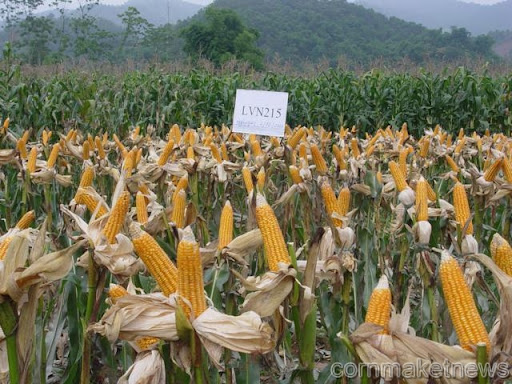 Trading in U.S. corn futures is expected to start mixed Friday as forecasters predict rains will continue to disrupt planting.
In overnight electronic trading, corn for July delivery, the most actively traded contract, rose 3/4 cents, or 0.1%, to $7.49 a bushel at the Chicago Board of Trade. Corn for December delivery, which represents the crop that is being planted for harvest next fall, slipped 3 cents, or 0.4%, to $6.59 a bushel.
Ongoing concerns about planting delays should underpin prices, as rains are expected to keep farmers out of their fields across large parts of the Midwest through next week, traders said. Grain users are on edge about the slow pace of planting because farmers need to harvest a big crop to replenish inventories, which are projected to reach a 15-year low this year.
"A wet pattern suggests minimal field work into the weekend and beyond, keeping the market supported," said Stewart Peterson, a risk management firm in Wisconsin.
Corn futures reached record highs last month on strong demand for limited inventories and are down about 4% from that level. The market may set fresh highs if the weather remains poor and demand stays strong, analysts said.
Conditions will not be conducive to field work. By Saturday, rains will fall in western Illinois and start proceeding eastward, according to meteorologists at Freese-Notis Weather, a private forecaster.
"This rain starts a wet seven-day stretch of weather for the region," they said.
The July contract has had support from planting problems, as market participants are nervous the delays will postpone next fall's harvest. That could leave inventories extremely tight before farmers bring in the next crop, meaning grain users need to lock in supplies remaining from the previous harvest.
The U.S. Department of Agriculture will issue an update on planting progress in a weekly crop report Monday. Traders predict planting will be about 80% complete. As of Sunday, the crop was 63% sown, below the five-year average of 75% for that time of year.
Yet, the grains could feel pressure from profit-taking after surging recently on worries about the weather, traders noted. Corn has already climbed 10% so far this week.
Saturday, May 21, 2011
Corn, Soybeans Rise as Midwest Rain Extends Planting Delays; Wheat Drops
 Corn futures rose, capping the biggest weekly gain since October, on bets that U.S. planting delays will persist because of more rain next week in the Midwest. Soybeans climbed, and wheat dropped.
Storms may bring 1.5 inches (3.8 centimeters) of rain to Ohio by May 24, said David Streit, a senior meteorologist at Commodity Weather Group. The pace of Ohio corn planting trails all states. About 63 percent of the nation’s crop is sown, behind the five-year average of 75 percent, U.S. Department of Agriculture data show. The next USDA forecast is on May 23.
“Some forecasts have rain in the next seven days for some of the areas that have been getting hit the hardest,” said Jason Britt, the president of brokerage Central States Commodities Inc. inKansas City, Missouri. Traders “will definitely be looking at Monday’s report to see how things are progressing,” he said.
Corn futures for July delivery rose 11.25 cents, or 1.5 percent, to settle at $7.595 a bushel at 1:15 p.m. on the Chicago Board of Trade, after touching $7.65, the highest for a most-active contract since April 28. Prices climbed 11 percent this week, the biggest gain since the week ended Oct. 8.
The commodity has more than doubled in the past year on tightening global supplies and increasing demand from producers of grain-based fuel and livestock farmers. The U.S. is the world’s biggest producer and exporter.
Soybean futures for July delivery rose 0.75 cent to settle at $13.8025 a bushel on the CBOT. Prices were up 3.8 percent this week, the biggest gain since January. The oilseed has climbed 46 percent in the past year on record Chinese purchases.
Wheat Declines
Wheat futures for July delivery fell 5.5 cents, or 0.7 percent, to $8.065 a bushel in Chicago. The price is up 72 percent in the past year, as drought cut output in Russia and eroded crops in the U.S. Great Plains. This week, prices were up 11 percent, the biggest gain since December.
“Wheat has had a heck of a run to the upside, so we’re seeing a little bit of profit taking possibly coming into this thing,” Britt said. Speculation that rain will fall in Europe, where crops are suffering from drought, also may have pushed prices lower, he said.
Parts of Germany may receive up to an inch of rain in the next week, while growing areas inFrance and the U.K. will remain dry, Commodity Weather Group’s Streit said by telephone from Bethesda, Maryland. The rain won’t be enough “to change the situation over there,” he said. “They’re still going to maintain an overall dry pattern.”
Corn is the biggest U.S. crop, valued at $66.7 billion in 2010, followed by soybeans at $38.9 billion, government figures show. Wheat was fourth at $13 billion, behind hay.
Corn closes up
![img_4dd67e6360310_16678[1]](https://blogger.googleusercontent.com/img/b/R29vZ2xl/AVvXsEiCFu1MlshP9GYLv7egUyci5_SovCHkI4UQqQYfC7FUVZGx7orisG-XnwDroLp28Uwc7hvwylmN7TQ8HOuOYKS6-2uz1RyN3dhguonpWy9AgDwWcmmk2y2Meq4hzxY1Avq4QoC8N9S_l5k/s1600-h/img_4dd67e6360310_16678%5B1%5D%5B3%5D.jpg "img_4dd67e6360310_16678[1]")
The July corn futures settled 11 1/4 cents higher at $7.59 1/2. The July soybean contract closed 3/4 of a cent higher at $13.80 1/4. The July wheat futures ended 5 1/2 cents lower at $8.06. The July soybean meal futures settled $8.00 per short ton lower at $360.60. July soyoil closed $0.38 higher at $57.46.
In the outside markets, the NYMEX crude oil is $1.09 per barrel higher, the dollar is higher and the Dow Jones Industrials are down 45 points.
Jack Scoville, PRICe Futures Group vice-president, says the market traded demand and weather Friday. "It is partly weather, but it is a lot of strong cash markets here in the Midwest. I have not seen much change at the Gulf, so it is domestic demand running this thing higher," Scoville says.
Scoville adds, "I have heard that the ethanol crowd has been buying but I have absolutely no confirmation that they are the ones. But, someone wants corn especially and also some beans, and the farmers are not selling right now."
Only river basis is weak and this is due to the flooding, he says. "Otherwise, lots of strong basis and little offer combined with more rains for the weekend."
Meanwhile, next week is setting up for potentially some dramatic price swings, as several major issues collide, according to Tim Hannagan, PFGBest.com senior grain analyst.
"First, heavy rains that are expected to start the week, would be bullish for prices. Two, month-end profit-taking, would turn the market bearish. Three, potential dry late May would turn the market higher," Hannagan says.
Traders look to go home long grains Friday, Hannagan says. "The trade anticipates that we will see the seventh consecutive higher overnight market opening Sunday night and Monday, as weather looks to bring rains to 80% of the Midwest Corn Belt states Tuesday through Thursday.
Source: http://www.agriculture.com/markets/analysis/corn/cn-closes-up_9-ar16678
Corn Heads for Biggest Weekly Gain in Seven Months on Import Speculation
 Corn rose in Chicago, heading for the biggest weekly gain in more than seven months, on speculation declines in the past two weeks may have increased demand from importers. Wheat and soybeans climbed.
Export sales of corn from the U.S., the world’s largest producer and shipper, more than doubled to 1.15 million metric tons in the week to May 12 from the previous week, the Department of Agriculture said yesterday. Wet weather that’s delaying corn seeding in the U.S. also may be boosting prices.
“It was the strongest weekly sales result since late March and signals that significant pent-up demand was uncovered as corn prices slumped in early May,” Luke Mathews, a commodity strategist at Commonwealth Bank of Australia, said in a report e-mailed today.
Corn for July delivery gained 8.25 cents, or 1.1 percent, to $7.565 a bushel by 11:15 a.m. London time on the Chicago Board of Trade. Prices are up 11 percent this week, on course for the biggest advance since the week ended Oct. 8. The grain slid 9.8 percent in the two weeks ended May 13 and more than doubled in the past year.
About 63 percent of U.S. corn was planted as of May 15, down from 87 percent a year earlier and a five-year average of 75 percent, the USDA said this week. The crop was 21 percent emerged from the ground, compared with 53 percent a year ago and 39 percent on average for the past five years, it said in a May 16 report.
Wheat Advances
Wheat for July delivery climbed 2.5 cents, or 0.3 percent, to $8.145 a bushel. The grain is up 12 percent this week, on course for the largest climb since the week ended Dec. 3, and surged 73 percent in the past year.
Prices jumped this week on concern worsening crop conditions in Europe, which accounts for about a fifth of global output, and the U.S. may slash world supply. Forecasters predicted May 18 the crop in France, the largest European Union wheat grower, will drop 12 percent on dry weather as second- ranking Germany’s harvest slides 7.2 percent.
As of May 15, U.S. winter wheat was in the worst condition since 1996, with 44 percent of fields rated poor or very poor by the USDA. The National Weather Service estimates rainfall in the past two months was less than half of normal in much of Texas, Oklahoma and Kansas.
Milling wheat for November delivery traded on NYSE Liffe in Paris fell 1.75 euros, or 0.7 percent, to 242.25 euros ($345.73) a ton.
Soybeans for July delivery increased 6.25 cents, or 0.5 percent, to $13.8575 a bushel in Chicago, taking the weekly gain to 4.2 percent. The oilseed climbed 47 percent in the past year, partly on rising demand from China, the world’s largest importer.
U.S. exporters sold 110,000 tons of soybeans to China for delivery in the 2011-12 season that starts Sept. 1, the USDA said yesterday. Before that transaction, export sales of soybeans advanced to 166,232 tons in the week to May 12 from 62,245 tons a week earlier, it said separately.
Farmers Planting More Corn in China on Increasing Prices May Limit Imports
 China, the world’s second-biggest consumer of corn after the U.S., will likely expand planting this year as farmers seek to profit from strengthening prices, according to industry and government researchers.
Planted area in the northeast grain belt may have expanded by as much as 10 percent, said Zhang Qi, analyst at Yigu Information Consulting Ltd., the biggest corn-information website by readership. Acreage will likely grow by 2.1 percent from last year, state-backed Grain.gov.cn said yesterday.
China’s demand for corn will grow faster than supply over the next 10 years, Grain News reported last month, citing Shang Qiangmin, director of the China National Grain & Oils Information Center. Corn in Chicago more than doubled in the past year, climbing to the highest since 2008 as global supplies failed to keep pace with demand, driving up world food costs. Sales of corn and feed wheat from state stockpiles in China limited domestic price gains to 5 percent this year.
“The weather has been pretty good overall for the planting season,” Zhang said by phone from Dalian yesterday, after completing field surveys in the provinces of Liaoning, Jilin and Heilongjiang.
July-delivery corn on the Chicago Board of Trade gained 0.5 percent to $7.525 a bushel at 12:24 p.m. in Singapore. The most- active contract on the Dalian Commodity Exchange rose 0.5 percent to 2,388 yuan ($367) a metric ton. Cash prices surged 14 percent in the past year, reaching a record 2,250 yuan a ton last week.
Switching Crops
Three northeastern provinces known collectively as Dongbei accounted for 29 percent of China’s corn output of 164 million tons in 2009, according to official statistics. The country’s output last year was 177 million tons, preliminary government data show, without giving a regional breakdown.
Corn areas in Liaoning, the southernmost province in Dongbei, expanded by about 2 percent, Zhang said, citing preliminary estimates. In Jilin, China’s third-biggest grower, corn areas grew 5 percent as farmers switched from coarse grains such as lentils and sunflower seeds, Zhao said. Farmers in Heilongjiang, the biggest producer, increased planting by more than 10 percent, he said.
“The warming climate is pushing back early frost and the use of new seeds is helping expand corn regions further north,” Zhang said. Farmers in the three provinces have sold most of last year’s crop, a month earlier than in previous years, as state reserves bought about 8 million tons and demand from traders and biochemical producers surged, Zhang said.
Limiting Use
China is limiting corn use by the biochemical and sweetener industry to ensure sufficient supplies for livestock feed, three people who received a government document on the matter said last month. Processors are barred from buying more corn than they consumed in 2009, they said.
Industrial use may not drop significantly because large processors anticipated government policies and bought supplies early, Ge Huanna, analyst at Wanda Futures Co., said by phone from Jilin on May 16.
China last year imported 1.6 million tons, according to customs data, the most in nearly 14 years, to cover an expected shortfall. In March, China Grain Reserves Corp. ordered about 1 million tons of U.S. corn, spokesman Cheng Bingzhou said by phone last week.
Imports may total 2 million tons in the year to June 30, the United Nations Food & Agriculture Organization said last week. The U.S. Department of Agriculture this month estimated purchases of 1.5 million tons for the marketing year through Sept. 30, while Aisling Analytics Pte on May 12 forecast 10 million tons for the current calendar year.
The growth of industrial corn demand in the past few years has “exceeded imagination,” Shang told a conference, according to the newspaper.
US Corn Futures Settles With Modest Gains
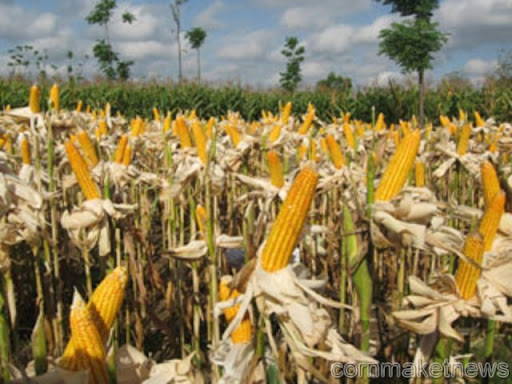 Corn futures were higher on Friday. The July contract was 11 1/4 cents higher at $7.59 1/2. December was 4 1/2 cents higher at $6.66 1/2.
Futures held on to modest gains despite a late selling pressure. For the weekly July futures were 93 cents higher and December 39 1/2 cents.
Nearby futures and the cash market led the rally this week even though weather and is mostly a new-crop feature. This year tight old-crop supplies and now late planting add to the old-crop tightness by pushing back the availability of new-crop. Basis levels are firming.
(Source: http://www.indiainfoline.com/Markets/News/US-Corn-Futures-Settles-With-Modest-Gains/3722982109)
Tuesday, May 17, 2011
Corn Advances for Fourth Day as Wet Weather Delays Spring Planting in U.S.
 Corn rose for a fourth day in Chicago and soybeans climbed after a report showed U.S. sowing lagged behind the pace of recent years as many fields remained too soggy for heavy farm machinery.
About 63 percent of the U.S. corn crop, the world’s biggest, was planted as of May 15, according to the U.S. Department of Agriculture. That compares with 40 percent a week earlier and 87 percent a year earlier. The average was 75 percent from 2006 to 2010.
“Given the tight supplies of old crop, the planting delay of U.S. corn is a concern,” said Han Sung Min, a broker at Korea Exchange Bank (004940) Futures Co. in Seoul. Wheat was also supported by the spring crop delay and deteriorating winter-crop conditions, while the delay in corn planting may encourage U.S. farmers to increase soybean seeding, Han said.
Corn for July delivery gained 6.5 cents, or 0.9 percent, to $7.04 a bushel by 1:15 p.m. London time on the Chicago Board of Trade. Prices are up 3.9 percent since trading ended on May 11. The grain almost doubled in the past year.
“Dry weather conditions in the western Midwest prompted farmers to rush to profit from the finally available window to advance plantings as much as possible as a delayed maturation increases the risk of frosts occurring later this season,” said Jonathan Bouchet, a Zurich-based analyst at OTCex Group. “However, wet conditions are forecasted to persist for some time in the eastern Midwest and Delta regions.”
Wheat Sowing
Soybean planting was 22 percent complete, compared with 7 percent a week earlier, 37 percent a year earlier and the five- year average of 31 percent, the USDA said. About 36 percent of the spring-wheat crop was seeded, against 22 percent a week earlier and an average 76 percent for the past five years, the USDA said.
Soybeans for July delivery rose 4.25 cents, or 0.3 percent, to $13.3075 a bushel, the first increase in three days. The oilseed gained 41 percent in the past year.
About 44 percent of the U.S. winter wheat crop was in very poor or poor condition, compared with 42 percent a week earlier and 8 percent a year earlier, the USDA said.
Wheat for July delivery rose 1 cent, or 0.1 percent, to $7.375 a bushel. The grain jumped 57 percent in the past year, partly as the worst Russian drought in 50 years cut world stockpiles. Milling wheat for November delivery traded on NYSE Liffe in Paris slipped 25 cents, or 0.1 percent, to 228.50 euros ($323.67) a metric ton.
U.S. corn planting 12 percent behind average
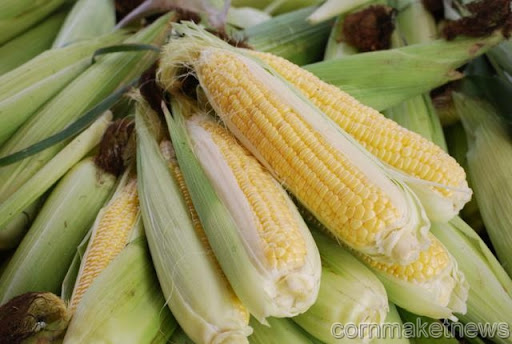 • The U.S. Department of Agriculture reports that, as of Sunday, May 15, 63 percent of the U.S. corn crop had been planted, only 12 percentage points below average for this time of year.
For the second week in a row, favorable weather in areas of the Corn Belt have helped growers catch up in their planting.
The U.S. Department of Agriculture reports that, as of Sunday, May 15, 63 percent of the U.S. corn crop had been planted, only 12 percentage points below average for this time of year.
“For many of our farmers, it’s been a good week,” said National Corn Growers Association President Bart Schott, of North Dakota. “In a few areas, we’ve still been challenged by rain and flooding, but our farmers are resilient and today’s corn can quickly grow tall and strong in the right conditions.”
In several key states, such as Iowa, Kansas and Missouri, corn planting progress has surpassed the average, while some states that were lagging saw great progress, especially Illinois and Michigan, where farmers planted 35 and 33 percent of the crop last week, respectively.
Ohio remains far behind, with only 7 percent of the crop planted compared to a five-year average that is 10 times that, while North Dakota is only 14 percent planted.
Last week, the USDA also predicted a record corn crop of 13.5 billion bushels, with a national average yield of 158.7 bushels per acre, assuming a planting of 92.2 million acres. At the end of June, the USDA will provide its complete yearly look at 2011 planted acreage.
(Source: http://southeastfarmpress.com/grains/us-corn-planting-12-percent-behind-average)
Monday, May 16, 2011
Corn Advances Most in a Week as Weather Curbs Crop Prospects; Wheat Rises
 Corn rose the most in a week in Chicago and wheat gained on concern wet weather will delay planting in the U.S. Midwest as dry weather in the southern Plains and Europe hurts winter-wheat prospects.
About 40 percent of the U.S. corn crop, the world’s biggest, was planted as of May 8, below last year’s 80 percent and the five-year average of 59 percent, the U.S. Department of Agriculturesaid in a report last week. Soil in the north of France, the biggest European Union wheat producer, was the driest in the past 50 years, Environment Ministry data show.
Wet weather along the Mississippi River that’s flooding fields and drought in parts of Kansas,Oklahoma and Texas are curbing yield prospects in the U.S., the biggest exporter of corn, wheat and soybeans, and boosting commodity prices. Food costs soared to a record in February as prices of raw materials gained.
“Conditions for grains are looking less than ideal, with no major change expected,” said Justine White, an analyst at researcher VM Group in London. “While corn planting areas continue to look soggy, major wheat-growing regions are struggling with drought, which will stress the crop. Dry conditions in the EU are putting pressure on wheat crops, which is a concern, as export demand is expected to be high.”
Corn for July delivery added 11 cents, or 1.6 percent, to $6.93 a bushel by 1:15 p.m. London time on the Chicago Board of Trade, advancing for a third day. Prices rose as much as 2.6 percent, the most since May 9. The grain fell 0.6 percent last week, touching the lowest price in almost two months on May 12.
Wheat Climbs
Wheat for July delivery rose 9.5 cents, or 1.3 percent, to $7.3725 a bushel. The most-active contract declined 4.2 percent last week, the third straight weekly drop. Milling wheat for November delivery traded on NYSE Liffe in Paris increased 3.25 euros, or 1.4 percent, to 229 euros ($323.83) a metric ton.
Flood warnings are in effect for states along the Mississippi including Iowa and Illinois, the largest U.S. corn growers, National Weather Service data show. Parts of Kansas, Oklahoma and Texas, the biggest U.S. producers of winter wheat, are in an “exceptional drought,” U.S. Drought Monitor data showed. The USDA will release its weekly crop progress report at 4 p.m. inWashington.
“The report is likely to confirm continued delays in planting progress caused by flooding in the Corn Belt, which are now likely to have an effect on yields,” VM’s White said. “Corn planted this late also becomes more vulnerable to extreme heat during the summer pollination phase.”
Survey Results
Sixteen of 23 traders and analysts surveyed from Tokyo to Chicago on May 13 said corn would rise this week, and 16 of 24 respondents forecast a gain for soybeans.
Soybeans for July delivery climbed 4 cents, or 0.3 percent, to $13.335 a bushel in Chicago. The oilseed gained 40 percent in the past year on increased demand from China, the biggest global importer.
Wet weather in the U.S. northern Plains is delaying seeding of spring wheat. About 22 percent of the crop was sown, compared with 65 percent a year earlier and an average 61 percent for the past five years, the USDA said. Soybean planting was 7 percent complete, compared with 28 percent last year and the five-year average of 17 percent.
“After wet weather during the weekend, there are forecasts for more rainfall this week in the U.S. Midwest,” said Toshimitsu Kawanabe, an analyst at broker Central Shoji Co. “We may see another delay in U.S. corn planting in a weekly crops- planting report later today.”
U.S. corn futures rise over 2 pct on talk of China buying, slow planting
May 16 (Reuters) - U.S. corn futures surged more than 2 percent in early Asian trading on Monday after talk of renewed buying of U.S. corn by China and expectations that a U.S. government report will show the pace of planting of the U.S. crop remains behind schedule.
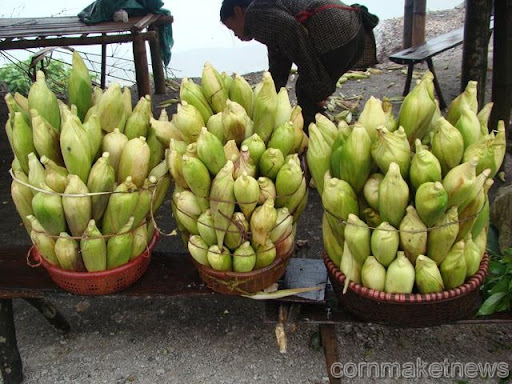
Chicago Board of Trade corn for July delivery Cc1 climbed 2.42 percent to $6.98-1/2 per bushel as buyers took advantage of last week's 0.5 percent dip, the second straight week of falls.
(Source: http://www.reuters.com/article/2011/05/15/idUSS9E7G303X20110515)
Corn futures hit 3-day high on U.S. crop concerns
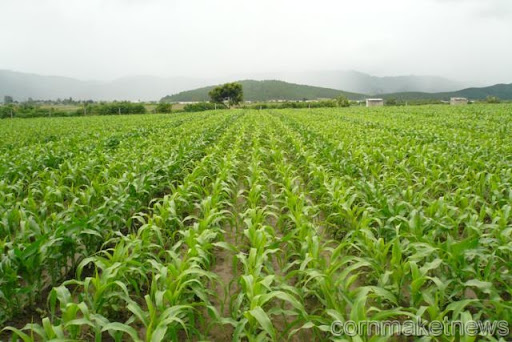 Futures Pros - Corn futures were up for a third day down on Monday, as persistent rain in key U.S. corn-growing regions threatened to further delay planting in the U.S.
On the Chicago Mercantile Exchange, corn futures for July delivery traded at USD6.9125 a bushel during European morning trade, jumping 1.17%.
It earlier rose to USD6.9938 a bushel, the highest price since May 11.
The Commodity Weather Group said that it expected persistent rainfall in the U.S. Great Plains to continue through May 18, while heavier precipitation was forecast to return to the U.S. Midwest between May 19 and May 21.
The rainy forecast added to concerns that U.S. farmers would delay planting of corn crops, potentially threatening yields and reducing the quality of the harvest.
The U.S. Department of Agriculture said in a report last week that approximately 40% of U.S. corn crops were planted as of May 8, down from 80% planted during the same week a year earlier and lower than the five-year average of 59% for this time of year.
According to the U.S. Grains Council, nearly 85% of the crop needed to be planted by May 22, or farmers faced higher risks that yields would fall below the historical average.
The U.S. is both the world's largest corn producing nation and the world's largest exporter of the grain.
Elsewhere, wheat for July delivery climbed 0.9% to trade USD7.3562 a bushel, while soybeans for July delivery added 0.15% to trade at USD13.3275 a bushel during European morning trade.
The Australian Bureau of Statistics said in a report earlier in the day that wheat exports from Australia declined for the first time in four months in March, dropping by 5.6% to 1.7 million tons.
Australia is the world's fourth largest wheat exporter.
Read more: http://community.nasdaq.com/News/2011-05/corn-futures-hit-3day-high-on-us-crop-concerns.aspx?storyid=75958#ixzz1MWRaPfUP


